魔改 claude-mem
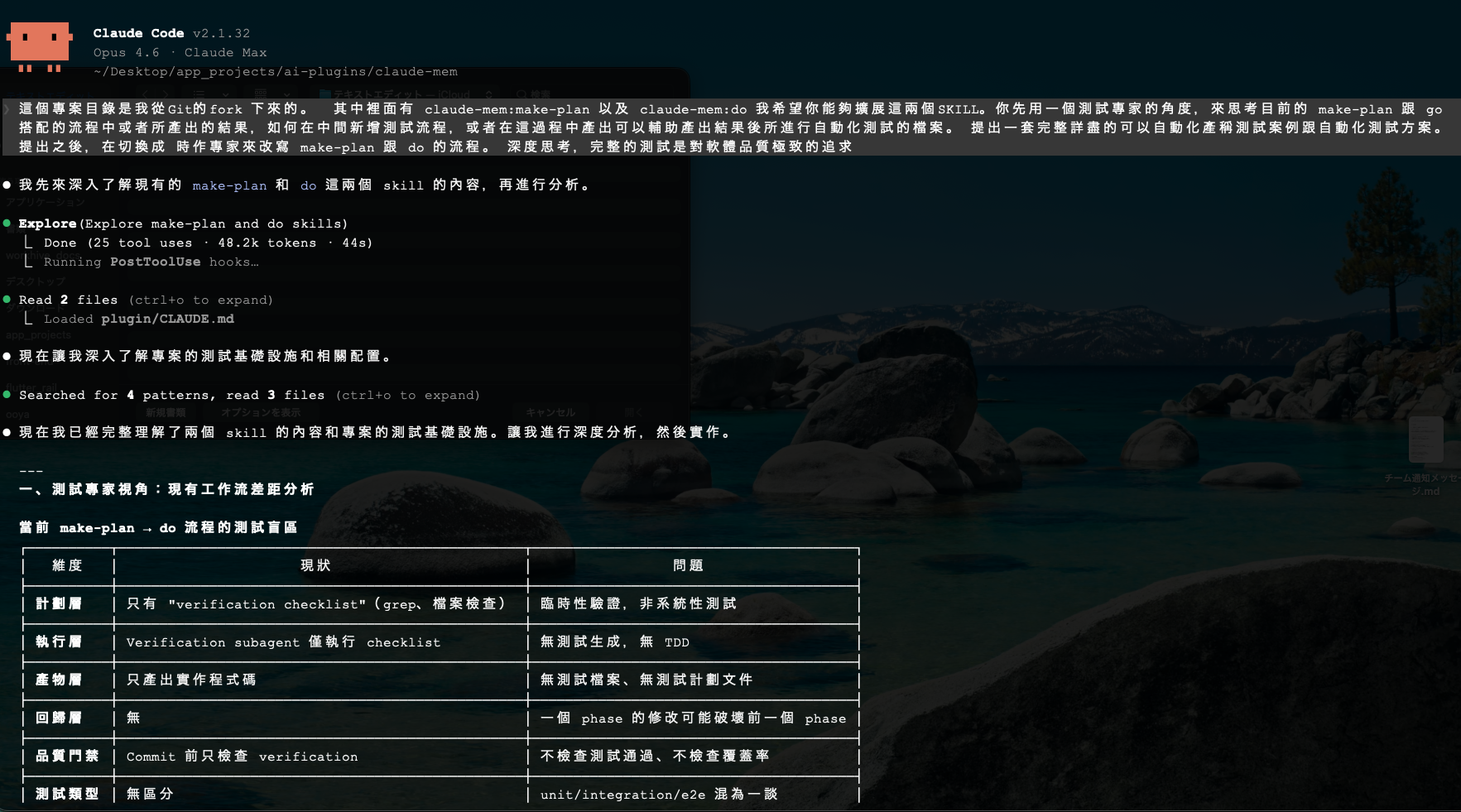
claude-mem 是針對 Claude Code 上下文視窗不連貫的最佳解決方案之一,其中的 make-plan 跟 do skill,搭配使用可以有 SDD框架的效果,但我覺得有改善的地方,所以就來魔改他。

魔改 claude-mem
<span className="text-emerald-500"> 當 SDD 遇上 TDD:為 Spec-Driven Development 補上測試這塊拼圖 </span>
SDD(Spec-Driven Development)是什麼
Spec-Driven Development 是 2025 年 AI 輔助軟體工程中最重要的新興實踐之一。它的核心理念是:規格(Specification)才是軟體開發的主要產物,程式碼只是從規格生成的輸出。
SDD 的標準生命週期:
- spec-init — 初始化功能規格
- spec-requirements — 產出結構化的需求文件(通常是 EARS 格式)
- spec-design — 架構設計文件,包含系統結構圖
- spec-tasks — 將設計分解為帶有依賴關係的實作任務
- spec-impl — AI Agent 從規格生成程式碼
SDD 解決了一個真實的問題:讓 AI 從「有用的自動補全」變成「可追溯的開發夥伴」。每一行 AI 生成的程式碼都能追溯回版本化的規格文件,這對審計、合規和團隊協作意義重大。
但在實際研究多個 SDD 框架(cc-sdd、OpenSpec、Kiro)和權威分析(ThoughtWorks、Martin Fowler)後,我們發現一個共同的缺口:測試在 SDD 的標準流程中並沒有被定義為獨立的階段。 測試被隱含在實作階段中,缺少系統性的測試規格、測試執行策略和測試品質把關。ThoughtWorks 在其分析中也坦承:「我們仍然需要高度確定性的 CI/CD 實踐來確保軟體品質」— 這暗示 SDD 本身並沒有完整解決品質保證的問題。
<span className="text-accent">我們的 make-plan + do 組合拳是什麼</span>
我們在 claude-mem 的 make-plan 和 do 兩個 Skill 基礎上做了擴展,目標是補上 SDD 缺少的測試維度,同時保留規格驅動的精神。
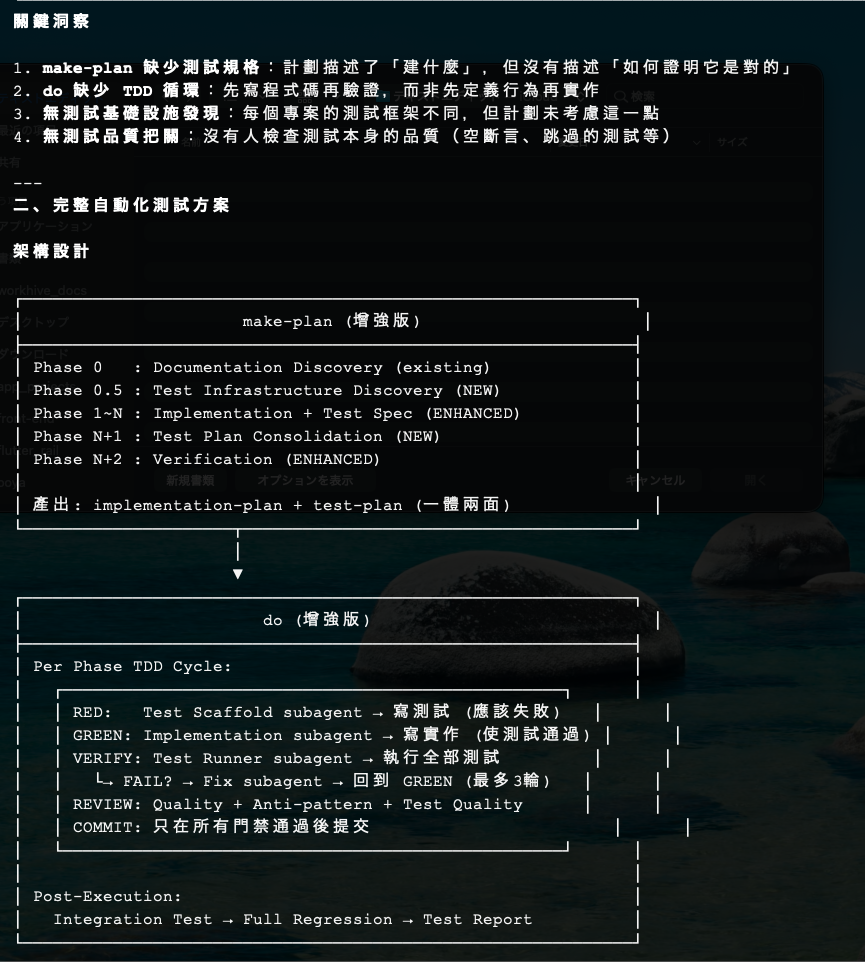
make-plan 的流程:
- Phase -1A 需求清晰度檢查 — 如果需求模糊,自動引導進入 brainstorming 環節或請使用者補充細節
- Phase -1B 風險評估 — 根據資料敏感度、影響範圍、可逆性、複雜度、現有測試覆蓋率五個維度,自動判定執行模式
- Phase 0 文件探索 — 搜尋並閱讀相關文件和 API
- Phase 0.5 測試基礎設施探索 — 發現專案的測試框架、命名慣例、工具鏈
- 每個實作階段 — 同時包含實作規格和測試規格,測試案例以 GIVEN/WHEN/THEN 格式定義
- Test Plan Consolidation — 產出完整測試矩陣,包含跨階段整合測試和驗收場景
do 根據風險評估結果分為三種執行模式:
- LIGHT 模式(低風險)— 逐模組實作後測試,流程最輕
- STANDARD 模式(中風險)— 逐階段 TDD,先寫測試再實作,獨立的 Test Agent 執行驗證
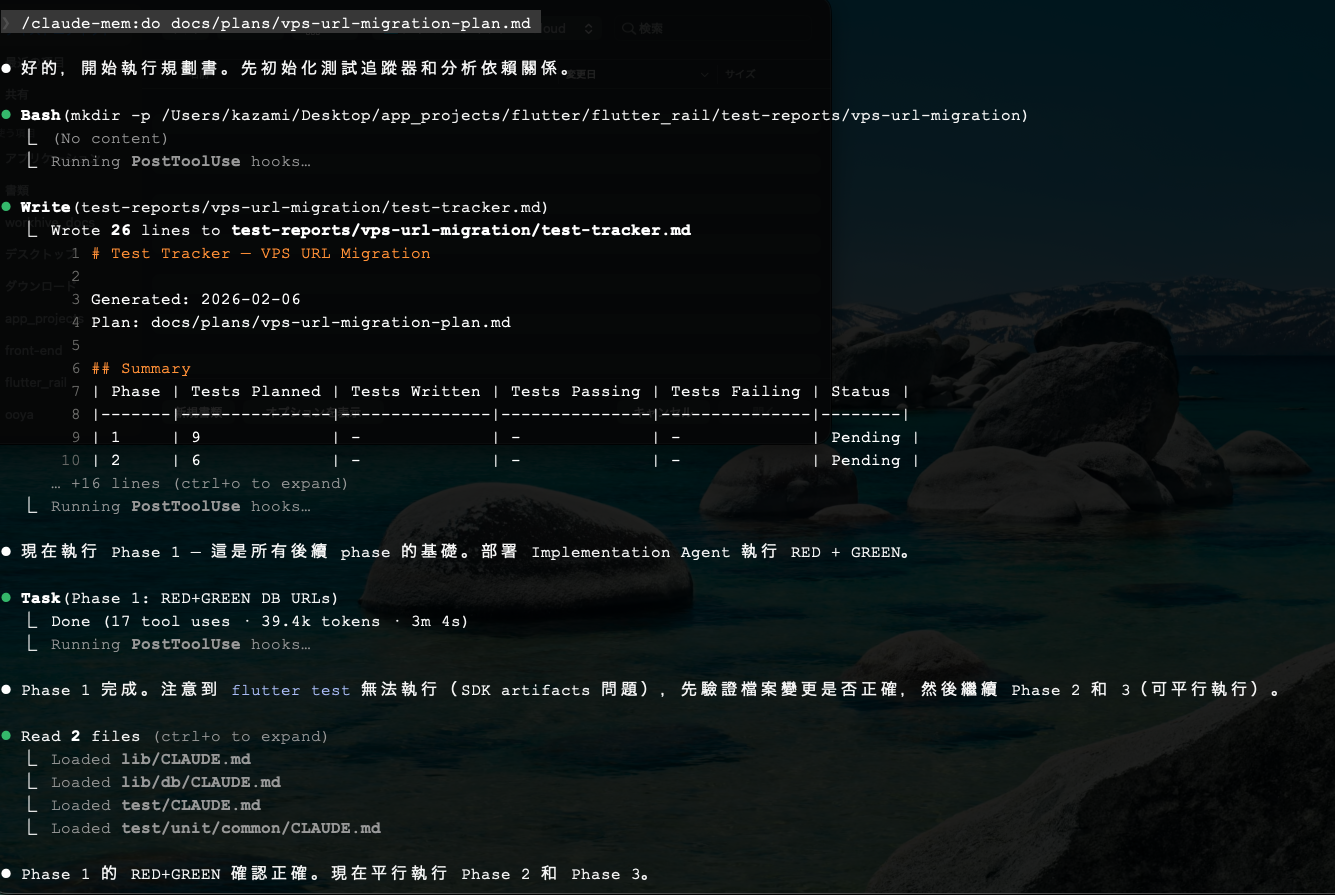
- FULL 模式(高風險)— 完整平行 TDD 流程,包含依賴分析、背景並行測試、test-tracker.md 追蹤檔案、人工檢閱門禁
<span className="text-sky-500">兩者的關鍵差異</span>
SDD 有完整的「從需求到程式碼」流程,但測試是隱含的。我們有<span className="text-rose-500">完整的「從規格到測試到驗證」流程</span>。
規格層面的差異:
- SDD 產出 requirements.md、design.md、tasks.md — 聚焦在「建什麼」和「怎麼建」
- 我們的 make-plan 在每個實作階段強制包含 Test Specification — 除了定義「建什麼」,還定義「怎麼證明它是對的」
- SDD 沒有測試基礎設施發現步驟,我們的 Phase 0.5 會自動偵測專案的測試框架和慣例
執行層面的差異:
- SDD 的 spec-impl 由 Agent 直接從規格生成程式碼,測試是實作過程中順帶處理的
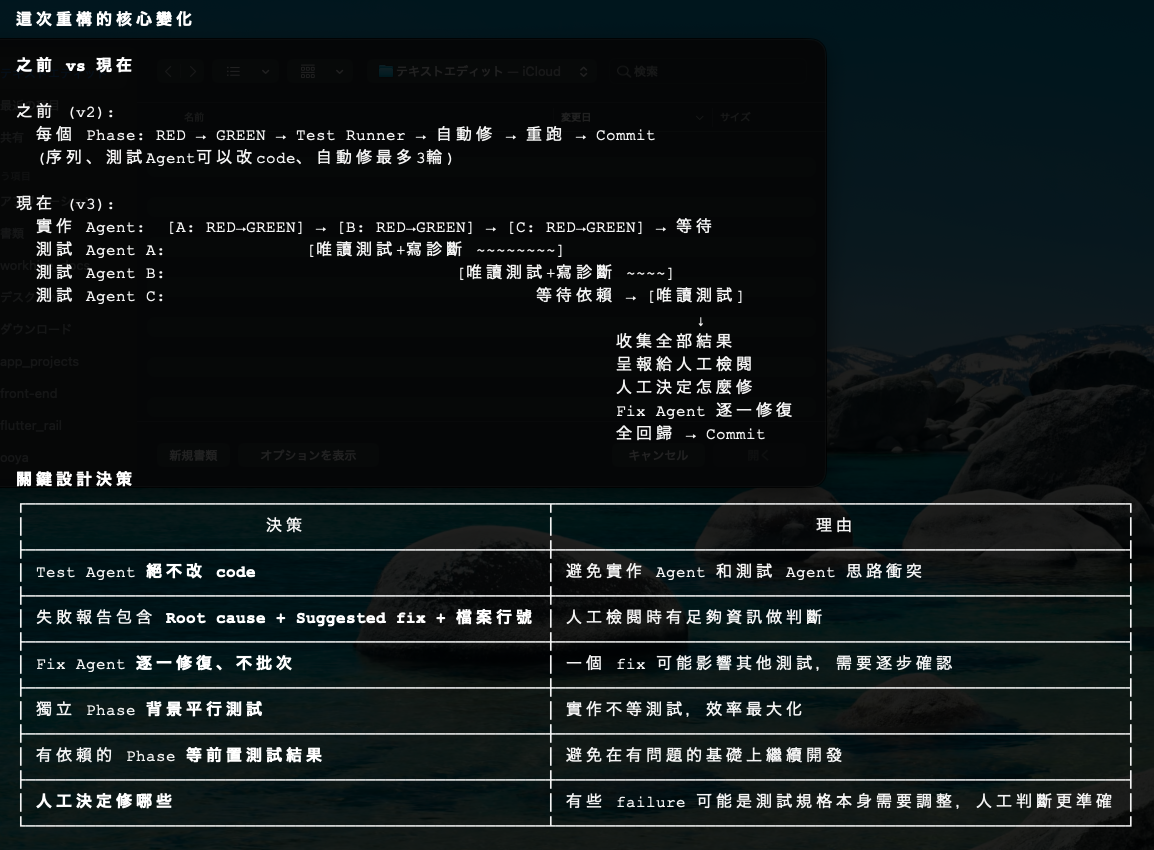
- 我們的 do 將實作和測試拆成兩個獨立角色:Implementation Agent 負責寫程式碼和測試檔案,Test Agent 負責執行測試和撰寫失敗診斷
- <span className="text-rose-500">Test Agent 是嚴格唯讀的 — 它只跑測試、記錄結果、分析失敗原因,絕不修改任何原始碼</span>。這確保了寫程式碼的 Agent 和驗證程式碼的 Agent 之間存在<span className="text-rose-500">認知隔離</span>
失敗處理的差異:
- SDD 沒有定義測試失敗後的標準處理流程
- 我們的流程中,Test Agent 對每個失敗的測試記錄完整的診斷:錯在哪個檔案的哪一行、為什麼錯、建議怎麼改。所有失敗彙整後交由人工檢閱,人工決定修復策略後才由專門的 Fix Agent 逐一修復
追蹤與產物的差異:
- SDD 的產物是規格文件和程式碼
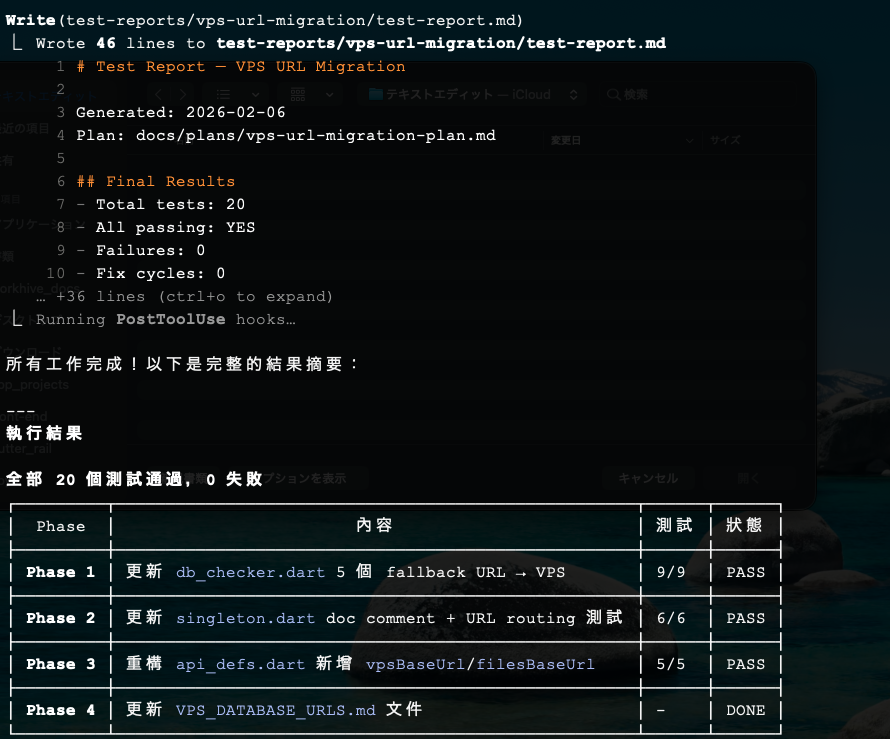
- 我們額外產出 test-tracker.md(記錄每個測試案例在每個階段的狀態變化)和 test-report.md(最終測試報告,含合規矩陣和修復歷史),這些文件隨程式碼一起提交,成為可追溯的品質證據
<span className="text-amber-500">結論:在規格驅動的基礎上,把測試變成一級公民</span>
SDD 建立了一條從需求到程式碼的結構化管道,讓 AI 生成的每一行程式碼都能追溯回版本化的規格。我們的架構包含了這個核心理念,並在它的基礎上將測試從隱含步驟提升為獨立的一級流程 —
測試規格與實作規格並行產出、獨立的唯讀 Test Agent 執行驗證、持久化的追蹤紀錄記錄每個測試案例的生命週期。
SDD 保證了「程式碼可以追溯回規格」。我們進一步保證了「程式碼行為符合規格」。
<span className="text-rose-500">但必須誠實地說,這些額外的保障是有代價的</span>。SDD 的流程清晰簡潔 — 五個步驟,直線推進,AI Agent 容易正確執行。我們的流程加入了風險評估、測試基礎設施發現、TDD
循環、角色分離、背景平行測試、人工檢閱門禁,整體複雜度高出許多。一個更完美但更難正確執行的流程,不一定比一個簡單但穩定的流程更好。
這也是我們設計風險自適應模式的原因。在計劃階段,系統會根據資料敏感度、影響範圍、可逆性、複雜度、現有測試覆蓋率五個維度自動評估風險等級,然後選擇對應的執行強度:
- LIGHT 模式(低風險)— 接近 SDD 的原始簡潔度。逐模組實作完成後生成測試、執行一次、回報結果。沒有額外的角色分離,沒有追蹤檔案。適用於內部工具、原型、一次性腳本
- STANDARD 模式(中風險)— 逐階段 TDD。先從規格寫測試,再寫實作,由獨立的唯讀 Test Agent 執行驗證。失敗時呈報人工決定。沒有背景平行測試,沒有追蹤檔案。適用於一般功能開發、非關鍵 API
- FULL 模式(高風險)— 完整流程。依賴分析後獨立任務的測試在背景平行執行,test-tracker.md 記錄每個測試案例的完整生命週期,所有失敗彙整後經人工檢閱門禁,Fix Agent 逐一修復,最終產出 test-report.md 作為品質證據。適用於核心 API、資料處理管線、認證系統、金流相關功能
低風險任務用最輕的流程,只有在高風險場景才啟動全部機制,避免為了品質而犧牲所有的效率。使用者也可以隨時覆蓋系統的判斷 — 如果系統判定 LIGHT 但你覺得應該用 FULL,你的選擇永遠優先。
<Gallery images={[ { src: "https://kazami.me/storage/posts/claude-mem-enhance/zh-tw/1770366960862-5f10e1f6-62d1-4ac8-aa7d-acbca5861863.png", alt: "claude-mem-enhance-zh-TW-gallery-1" }, { src: "https://kazami.me/storage/posts/claude-mem-enhance/zh-tw/1770366961888-dfe58a92-20d5-4b4a-9036-14bc6d298d54.png", alt: "claude-mem-enhance-zh-TW-gallery-2" }, { src: "https://kazami.me/storage/posts/claude-mem-enhance/zh-tw/1770366963021-d04a05a1-1388-42a6-9647-cf8e9b3b8df3.png", alt: "claude-mem-enhance-zh-TW-gallery-3" }, { src: "https://kazami.me/storage/posts/claude-mem-enhance/zh-tw/1770366964550-0ebef1b8-e1ae-4d60-8274-0f6991e632b3.png", alt: "claude-mem-enhance-zh-TW-gallery-4" }, { src: "https://kazami.me/storage/posts/claude-mem-enhance/zh-tw/1770366964800-20beacb2-94f1-4f3e-8f9e-d5605f9abc19.png", alt: "claude-mem-enhance-zh-TW-gallery-5" }, { src: "https://kazami.me/storage/posts/claude-mem-enhance/zh-tw/1770366965713-5857ee21-e67f-4b7b-9d6d-fcd15a54f242.png", alt: "claude-mem-enhance-zh-TW-gallery-6" } ]} />